In modern industrial factories, mass production systems are controlled by automation systems. One of the most important devices is the PLC (Programmable Logic Controller), which controls the operation of machinery and various production processes within the factory, acting as the "brain" of the entire automation control system.
Mitsubishi PLC is one of the most popular brands in the industry due to its high stability, ease of use, and a variety of models available, supporting everything from small machines to large production systems.
Mitsubishi PLC
Programmable Controllers developed by Mitsubishi Electric for use in factory automation systems, such as
- Conveyor systems
- Industrial machinery
- Production control systems
- Packaging systems
- CNC machines or part manufacturing machines

The PLC receives signals from various devices such as sensors, switches, or control buttons, processes the data according to the specified program, and sends commands to output devices such as motors, valves, or relays to control the operation of machinery.
What models does Mitsubishi PLC have?
Mitsubishi Electric PLCs come in several series to support different applications, such as
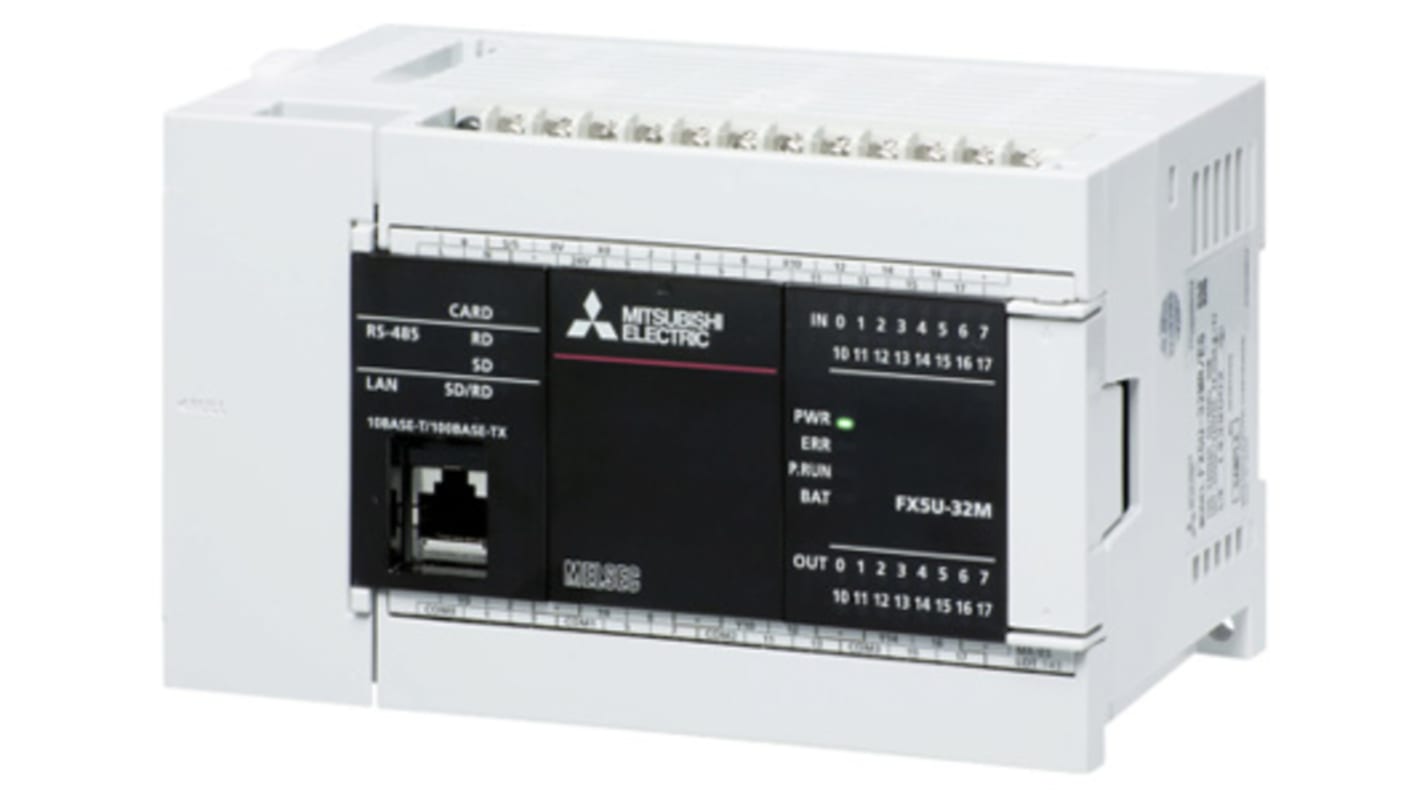 |
FX Series
View product👉 Click |
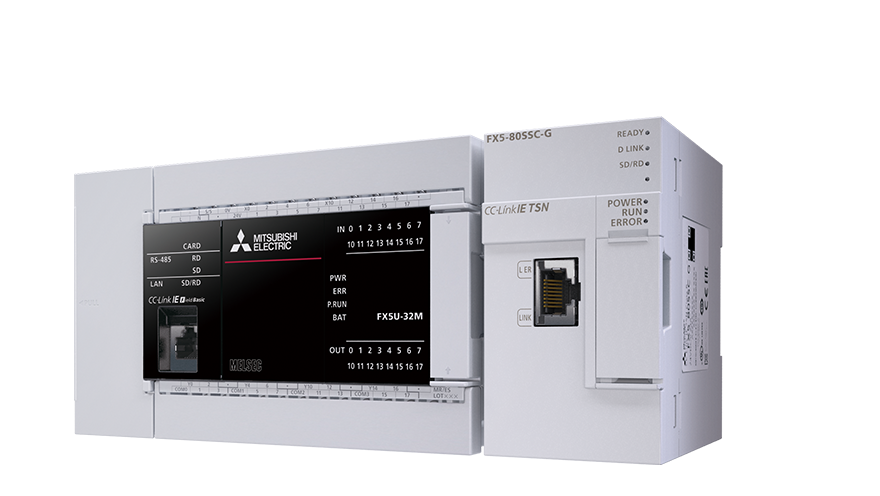 |
MELSEC iQ-F Series
View product👉Click |
 |
Q Series
View product👉Click |
 |
iQ-R Series
View products👉Click |
The main structure of Mitsubishi PLC
Generally, a PLC consists of several main components, including
1. CPU (Central Processing Unit)
It is the main processing unit of the PLC system that reads input data from sensors and various devices, processes it according to the pre-set program, and sends commands to the output to control the operation of the machinery. A high-performance CPU helps the system respond quickly and accurately, which is a key factor in reducing errors and increasing production efficiency.
2. Input Module
Used to receive signals from various devices installed in the production system, such as temperature and pressure sensors, limit switches, manual control buttons, and other detection devices that send machine status information back to the PLC so that the system can make decisions and control operations accurately.
- Sensor
- Limit switch
- Push button
3. Output Module
Used to send signals to control various devices that are essential parts of the production system, such as electric motors that drive machinery, solenoid valves that control the flow of liquids, and indicator lights that signal the status of the system. The Output Module converts digital signals from the CPU into appropriate electrical signals to enable output devices to operate according to commands.
- Motor
- Solenoid valve
- Alarm lamp
4. Power Supply
It provides power to the PLC system and various modules, which is crucial for maintaining operational stability. A high-quality Power Supply helps prevent damage from voltage fluctuations and ensures that the PLC system can operate continuously and safely.
5. Communication Module
Used to connect the PLC with other devices in the production system, such as HMI (Human Machine Interface) that allows operators to visualize and control the production process, SCADA (Supervisory Control and Data Acquisition) used for managing large systems, and Industrial Network that connects multiple PLCs together. The Communication Module enables data to be transmitted quickly and reliably between different devices, which is essential for the operation of modern automation systems.
Why people choose Mitsubishi PLC
High reliability
The equipment is designed to withstand harsh factory environments, such as fine dust, high temperatures, humidity, and vibrations from machines. The internal components of Mitsubishi PLC are selected and rigorously tested to ensure stable and reliable operation over a long period, even in extreme operating conditions. This durability helps reduce maintenance costs and minimize unexpected production downtime
Supports various tasks
It can be used with various types of machines, from small machines to large automated production lines, whether it is packaging systems, CNC machines, conveyor systems, or other industrial machines. This flexibility makes Mitsubishi PLC a cost-effective choice for factories with diverse needs
Easy system expansion
I/O (Input/Output) modules or communication modules can be added to expand the system as needed by the factory. When production processes change or additional demands arise, users can install additional modules without needing to replace the entire PLC. This expandability allows factories to improve and develop systems flexibly and reduces long-term investment costs
Supports industrial system connectivity
It can connect with HMI (Human Machine Interface) to allow operators to visualize and control the production process in real-time, SCADA (Supervisory Control and Data Acquisition) for managing and monitoring large systems, and an Industrial Network that connects multiple PLCs together. This easy connectivity allows factories to integrate various systems smoothly and enhances data collection and analysis capabilities for better decision-making
The use of Mitsubishi PLC in factories
Examples of PLC applications in industry include
- Control machines that produce goods
- Product conveyor system in the production line
- Automated packaging control system
- Temperature or production process control system
- CNC machine control system
Using a PLC helps increase production efficiency, reduce human errors, and make the production system more stable
Summary
Mitsubishi PLC is one of the essential devices for automation in modern factories due to its high stability, ease of use, and versatility, from small machines to large production systems
Choosing the right PLC for the job will help improve production efficiency, reduce operating costs, and support the development of factories towards automated industrial systems in the future